Benchmarked Across the Whole Data Stack
Works with your data stack












Bring your own LLM









Six Things a Generic Coding Agent Does Not Give You.
Every capability is open source, MIT-licensed, and reproducible from a published benchmark.
Bring your own LLM
Anthropic, OpenAI, Google, Bedrock, Azure, Ollama, Snowflake Cortex, Databricks AI Gateway, and more. No vendor lock-in.
12+ providers · BYO keyCross-platform
Claude Code Data Engineering, Cursor, Windsurf, VS Code, and any MCP-compatible client. One install, everywhere.
MCP-native · one installValidation layer
SQL, lineage, and equivalence checks run in compiled Rust, not the model. Same input, same output, every run.
100% F1 · ~2 ms · 0 tokensToken efficiency
Context compaction trims the schema payload per task. The gateway routes each call to the cheapest model that clears your accuracy bar.
per-task routing · context compactionData governance
Policy gates, PII detection, and compliance checks run before the agent writes a column. Audit-ready.
policy · PII · audit trailSee It in Action
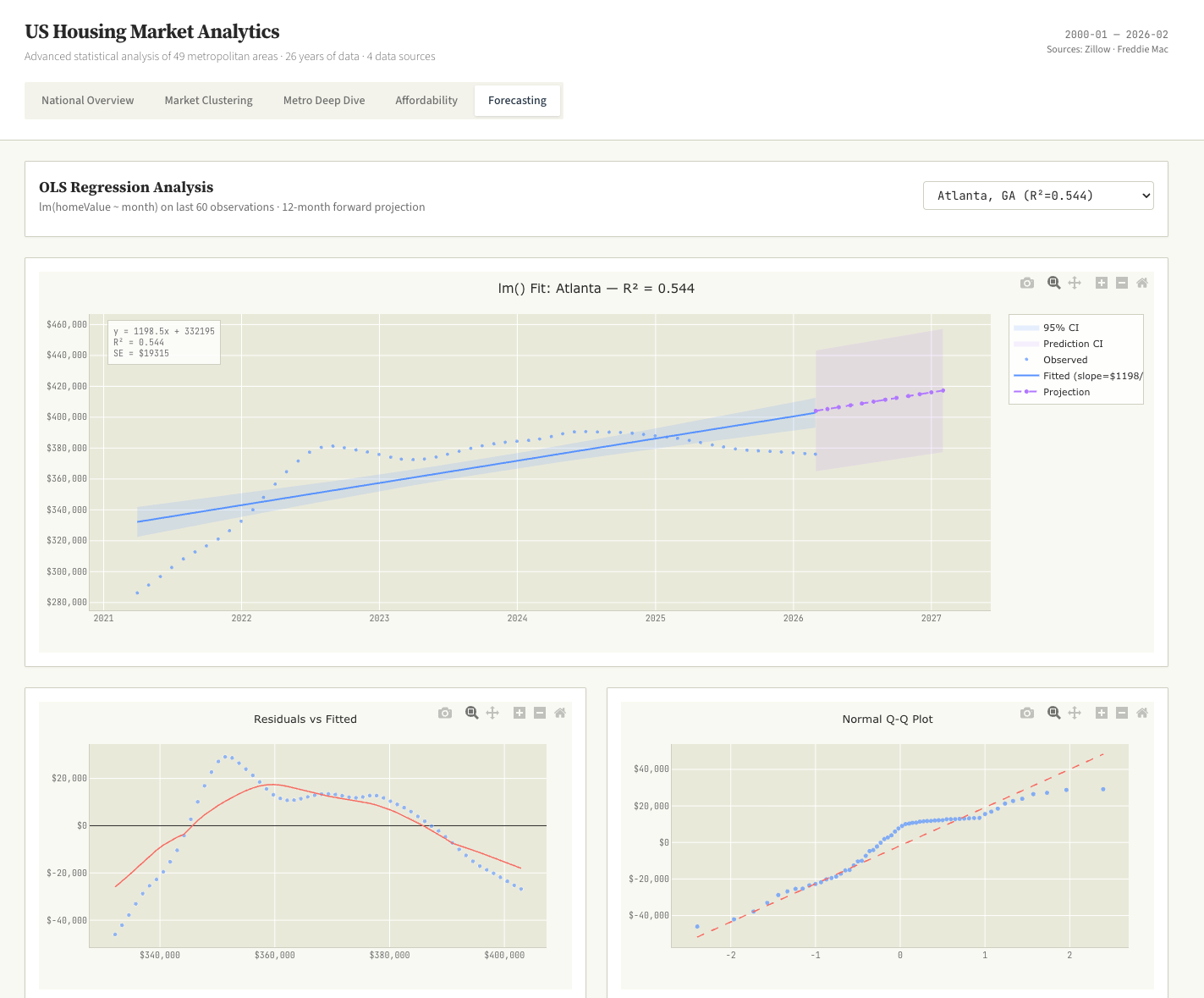
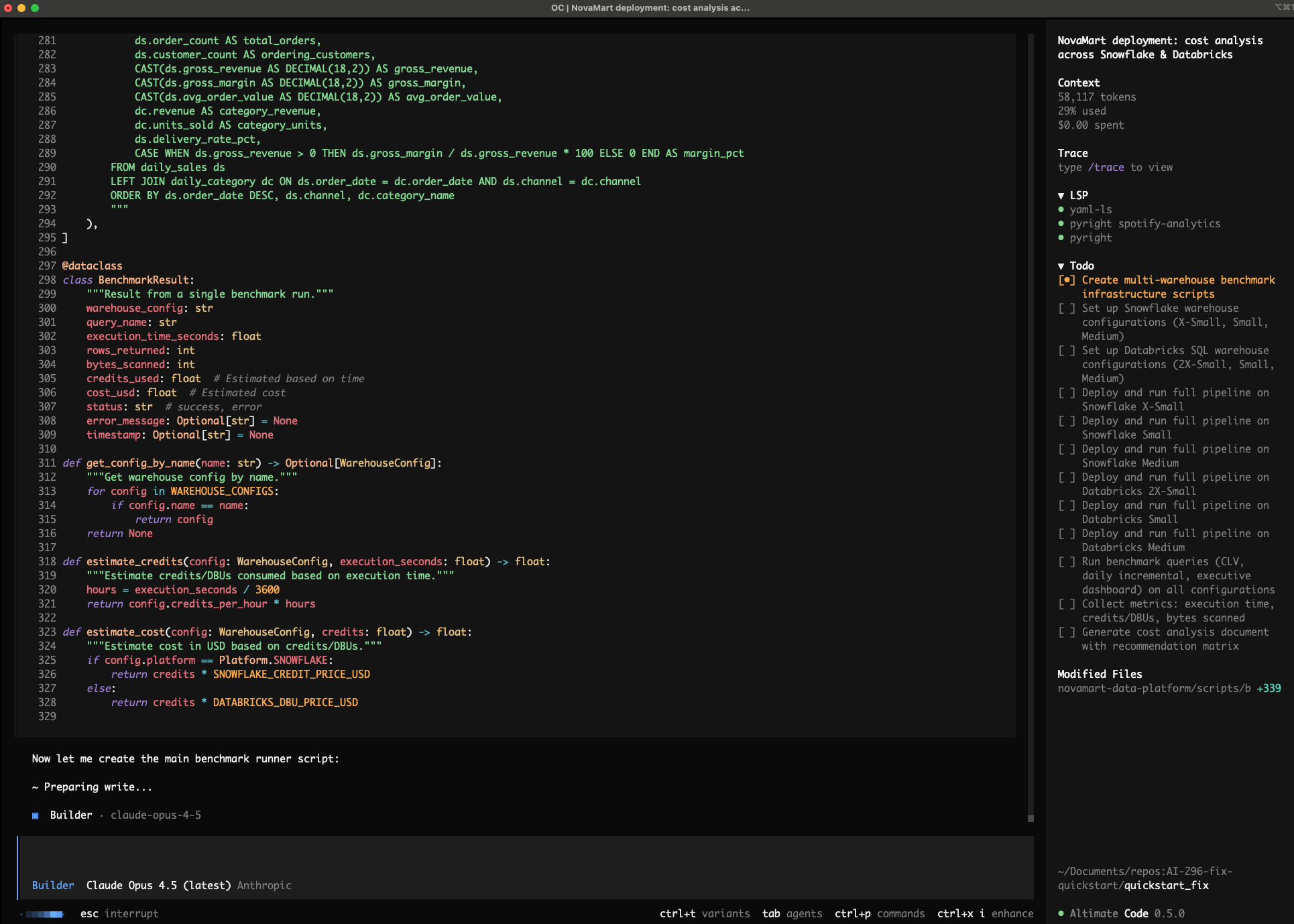
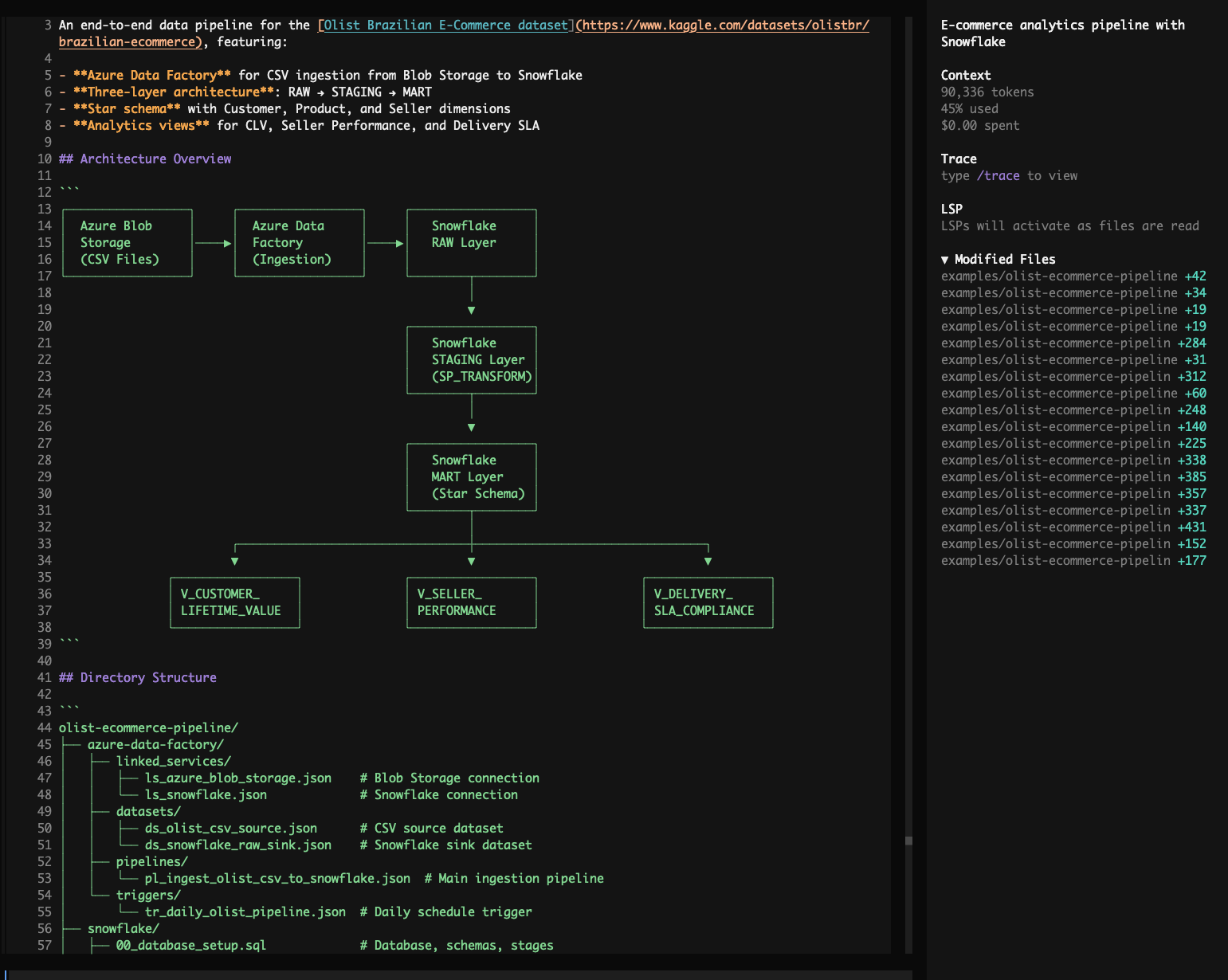
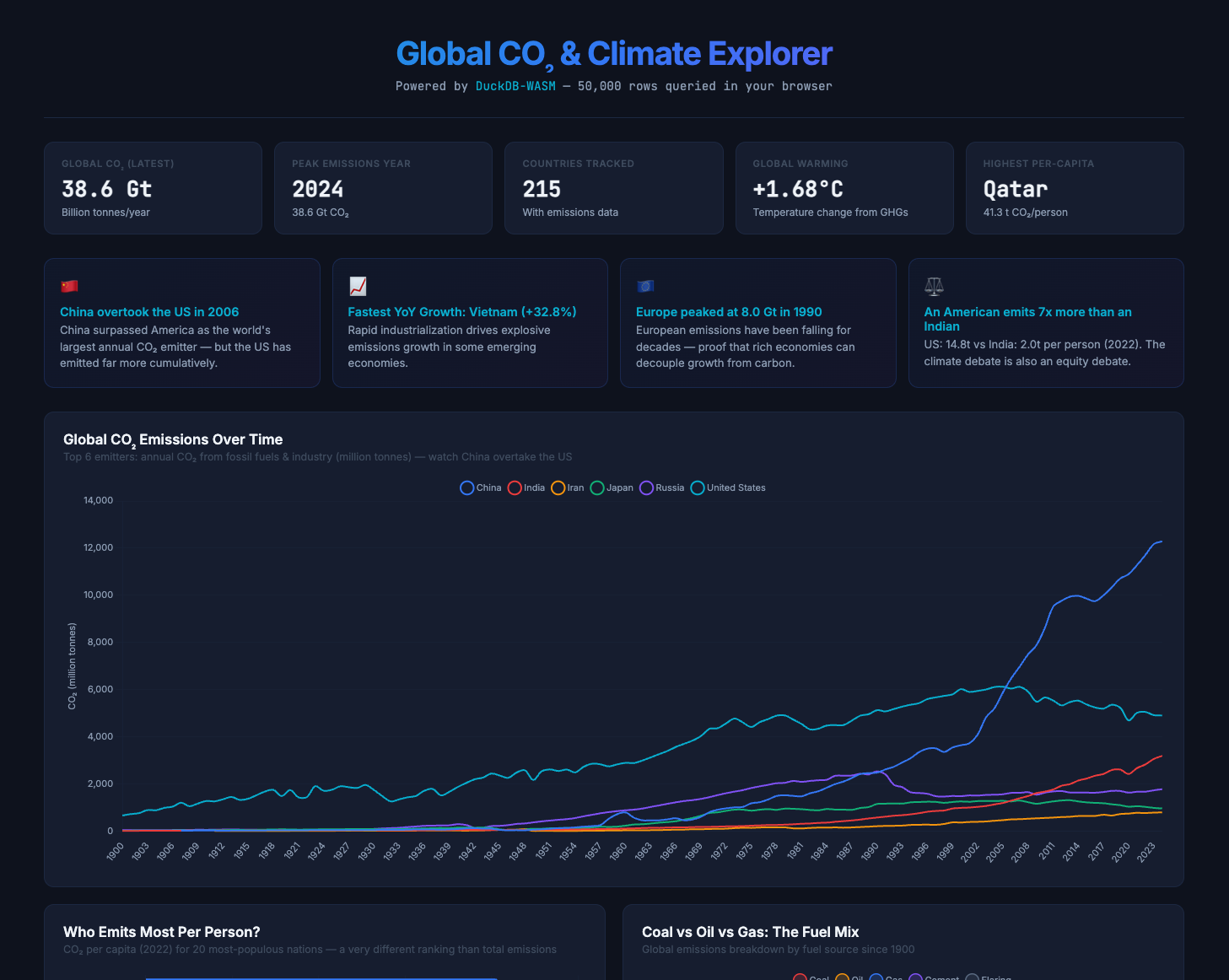
Real-world pipelines built end-to-end with a single prompt
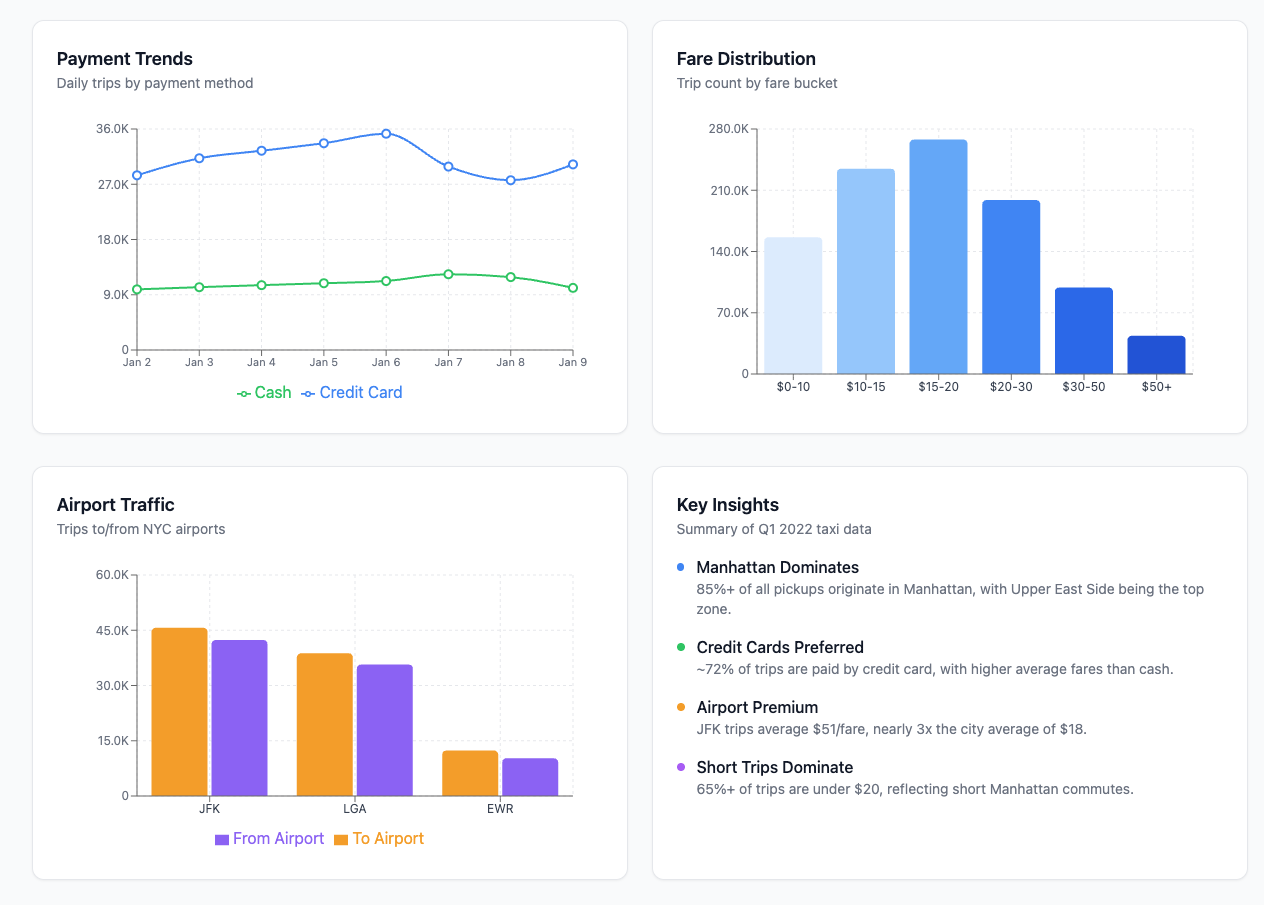
NYC Taxi Coverage Dashboard
Curious to know more? Check out the examples
Join the Community
altimate-code is built in the open. Get involved.
Frequently Asked Questions
Altimate Code is an open-source agentic harness for data engineering. It gives AI agents like Claude and GPT-4 100+ deterministic tools for SQL analysis, column-level lineage, dbt, FinOps, and warehouse connectivity across Snowflake, BigQuery, Databricks, Redshift, and Postgres. It scored 78.0% on ADE-Bench using DeepSeek V4 Pro. MIT licensed, install with npm install -g altimate-code.
Altimate Code outperforms Claude Code on data engineering benchmarks — 78.0% vs 40% on ADE-Bench. The difference is the harness: Altimate Code provides 100+ purpose-built, deterministic tools for SQL, lineage, dbt, and warehouses. Claude Code uses general-purpose coding tools. Altimate Code also works with any LLM, not just Anthropic models — achieving 78.0% with DeepSeek V4 Pro on DuckDB.
Altimate Code and Claude Code cover different halves of the same job, so many teams run both. Claude Code handles orchestration: it reads the repo, plans the change, and edits the files. Altimate Code supplies the data engineering layer underneath it, including warehouse connectivity, column-level lineage, PII classification, schema diffs, impact analysis, and a real dbt build against your warehouse. When it comes to data engineering, Claude Code ships no deterministic lineage tracer, PII classifier, or schema diff engine.
Connecting the two takes one install. npm install -g altimate-code ships the data engineering skills, and /configure-claude registers an /altimate command inside Claude Code so you can call Altimate's deterministic tools from the session you are already working in. mcp_discover reads the MCP servers you have already configured in ~/.claude.json, so existing connections carry over. Altimate Code stays model-agnostic, so the same tools work if your team also uses Codex, Cursor, or a different provider.
Start by installing the CLI and running altimate-code check on your project, which works without a model provider or API key.
Altimate Code supports Snowflake, BigQuery, Databricks, Redshift, Postgres, MySQL, DuckDB, and SQLite. It auto-detects your warehouse on setup and provides warehouse-specific tools for cost optimization, query analysis, and schema management. Cross-warehouse data parity checks run across all supported platforms simultaneously.
Yes — Altimate Code is fully open-source under the MIT license. There is no paid tier, no platform fee, and no vendor lock-in. You bring your own LLM (Anthropic, OpenAI, Google, AWS Bedrock, Azure, Ollama, and 10+ more providers). The only cost is your LLM API tokens.
Altimate Code works with Claude Code, Cursor, Windsurf, VS Code, and any MCP-compatible client, enabling data engineering workflows in each of them. It exposes tools via the Model Context Protocol (MCP), so any agent that supports MCP can use it. A team using Cursor for data engineering gets the same lineage, dbt, and warehouse tools as the terminal. It also has a built-in TUI (terminal UI) for running skills directly from the command line.
ADE-Bench is a benchmark created by Benn Stancil (founder of Mode) with dbt Labs that evaluates AI agents on real-world analytics engineering tasks. Tasks run in Docker sandboxes against actual dbt projects and databases. Altimate Code scores 78.0% using DeepSeek V4 Pro on DuckDB — ahead of Cortex Code CLI (65%), dbt Labs (59%), and Claude Code baseline (40%).
DAB-Bench (Data Agent Benchmark) is a heterogeneous multi-database benchmark from UC Berkeley’s EPIC Lab that tests agents across PostgreSQL, MongoDB, SQLite, and DuckDB. Altimate Code scores 71.7% Pass@1 using GPT-5.5 + Claude Sonnet 4.6, ahead of Spacedock/Recce (67.2% on Opus 4.8), MinusX (65.2%), and Pi Coding Agent (61.0% on Opus 4.6). Together, these two independent benchmarks confirm that purpose-built data engineering tools consistently outperform general-purpose agents regardless of the underlying LLM.